

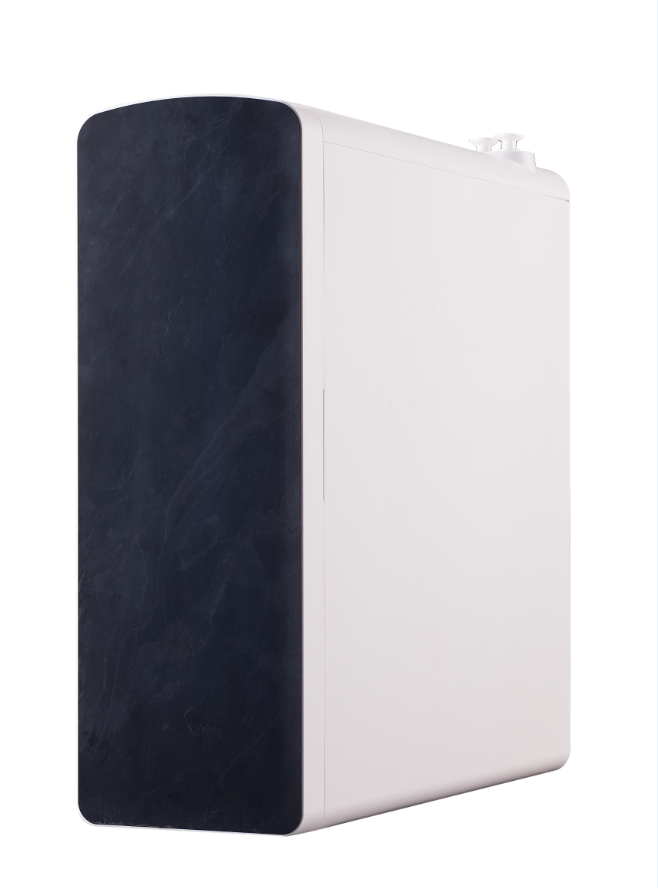
The day I installed my first under-sink reverse osmosis system, I felt like a superhero. I had conquered bad water. I was the guardian of my family’s health, the sentinel against contaminants, the winner in the invisible war against dissolved solids. I replaced the filters religiously, checked the TDS meter daily, and felt a surge of righteous satisfaction every time I filled a glass.
Then something strange happened.
I became obsessed with water quality. I tested it constantly. I worried about it on vacation. I researched contaminants I’d never heard of. I spent hours reading about PFAS, microplastics, and the latest studies on emerging contaminants. The more I purified, the more I worried about what might be getting through.
My water was cleaner than ever. My anxiety was worse than ever.
This is the water purifier paradox: the very device that promises peace of mind can become the source of a new kind of worry. When we focus on purity, we risk losing perspective.
The Birth of the Purification Obsession
It started innocently enough. A friend told me about the dangers of lead in old pipes. I had an old house. I tested the water. The lead was barely detectable, but the fact that it was there at all was enough.
I bought the most advanced system I could afford. Seven stages. It removed everything. The water was so pure, it tasted like nothing. I was proud. I was safe.
But then I started reading. There were always new threats. There were always more contaminants. The science was always evolving. What was considered safe yesterday was suspect today. The goal posts kept moving, and I kept chasing.
What I didn’t realize: The water purifier wasn’t making me safer. It was making me a more informed worrier. The knowledge of what could be in my water—even if it wasn’t actually there—created a perpetual state of concern.
The Thin Line Between Informed and Obsessed
Where does informed caution become unhealthy obsession?
The signs I ignored:
I wouldn’t drink water anywhere but home
I brought my own water to restaurants
I researched contaminants during my free time
I worried about my children’s water at school
I couldn’t stop testing my filtered water, even though it was always fine
Looking back, my water purifier had become a security blanket. It was the visible symbol of my invisible control over a chaotic world. The more I controlled my water, the more I felt I was controlling other things. But the illusion of control wasn’t helping.
The Science of Water Anxiety
There’s a name for this phenomenon: chemophobia. Not fear of all chemicals, but fear of chemical contaminants. It’s a modern malady, fed by the vast, often conflicting information available at our fingertips.
The World Health Organization, the EPA, local water authorities, and advocacy groups all publish lists of contaminants and their “safe” levels. The problem is that “safe” is a moving target. What’s safe for an adult may not be safe for a child. What’s safe for a day may not be safe for a lifetime.
We’re being told, effectively, “There are thousands of potential threats in your water, and here’s how to measure them.” For some of us, that becomes an invitation to worry, not just to take reasonable precautions.
The Placebo Effect: Clean Water and Peace of Mind
Here’s the uncomfortable truth I discovered: my water was probably clean enough before I installed the purifier. The municipal water was within all federal standards. There was no acute health risk. The purifier was an extra layer of protection, not a necessity.
But I felt safer. I felt healthier. The physical benefits of clean water were real, but the psychological benefits were even more significant. I was doing something proactive for my family’s health. That gave me a sense of agency that reduced my background anxiety.
The irony: The purifier made me worry more in the short term, but less in the long term. The initial obsession faded. What remained was a steady, comfortable confidence in my home’s water. The reassurance outweighed the occasional worry.
The Wisdom of the Three-Bucket Rule
After a year of obsessing, I developed a simple framework for maintaining perspective. I call it the Three-Bucket Rule.
Bucket 1: The Known Knowns
These are the contaminants you’ve actually tested for and found in your water. Focus your attention here. If your test shows lead, install a lead-removing filter. If your test shows bacteria, install UV. These are real problems requiring real solutions.
Bucket 2: The Known Unknowns
These are contaminants you’ve read about but haven’t tested for. They might be in your water. They might not. Don’t panic. Instead, decide whether to test or whether to invest in broad-spectrum protection (like a high-quality carbon filter that removes a wide range of contaminants).
Bucket 3: The Unknown Unknowns
These are contaminants you haven’t even heard of yet—emerging threats that will be discovered in the future. You can’t worry about them effectively. Accept that you’re doing your best with current knowledge and move on.
The key insight: most of our worry comes from Bucket 3. We panic about threats we can’t name and can’t measure. The solution is to focus on what you can actually know and control.
The Vacation Test
The most powerful corrective to my water anxiety was traveling.
When I’m on vacation, I can’t control the water. I have to trust the hotel’s filtration or rely on bottled water. There’s no TDS meter in my suitcase. There’s no daily test ritual. And somehow, I survive. I don’t get sick. I don’t develop a mysterious illness. The world doesn’t end.
Coming home, I realized: my baseline of acceptable water was far broader than I’d imagined. My purifier was a luxury, not a requirement. The belief that I needed it was in my mind, not in my body.
When Clean Water Becomes a Source of Stress: Warning Signs
If you recognize these patterns, it might be time to examine your relationship with your water purifier:
You’re spending more than a few minutes a day thinking about or managing your water: Testing, researching, checking the system, worrying about it. If it’s becoming a significant part of your daily routine, it’s worth examining why.
You can’t drink water away from home: If you’re bringing your own water to restaurants or refusing water at friends’ houses, your concern has moved beyond reasonable caution.
You’re researching contaminants more than living your life: If your free time is spent on water quality forums and research papers, you’ve crossed from informed to preoccupied.
You’re spending money you can’t afford: Upgrading systems, buying testing kits, replacing filters too early. The financial burden is a sign that the anxiety is controlling your decisions.
Your family is concerned about your behavior: If your partner or children are worried about your water-related habits, it’s time to listen.
A Practical Reset: Three Steps to Sanity
If your water purifier has become a source of stress, try this three-step reset.
Step 1: Test and Trust
Run a comprehensive lab test on your filtered water. If it comes back clean, trust it. Don’t test again until your filters need changing. The numbers won’t change unless something breaks, and you’ll know that when the test is done.
Step 2: Simplify Your Routine
Stop tracking TDS daily. Replace the filter as scheduled, not as a response to anxiety. Remove the smartphone app from your home screen. Your system is doing its job. Let it.
Step 3: Practice “Water Neutrality”
Challenge yourself to drink water from different sources occasionally. A restaurant glass. A friend’s house. A public fountain. Pay attention to whether you survive. The answer will always be yes. Repeat until the anxiety fades.
The Joy of Enough
Our ancestors worried about water in a much simpler way: “Will this make me sick in the next 24 hours?” Modern life has given us the luxury of worrying about “Will this slowly harm me over decades?”
That’s a gift. It comes from our knowledge of science and our ability to test and treat water. But it can also be a burden. In our pursuit of perfect water, we can forget that good water is often enough.
I still use my water purifier. I still change the filters. I still believe it’s a worthwhile investment in my family’s health. But I’ve stopped obsessing. I’ve stopped testing daily. I’ve stopped reading the latest studies. I’ve stopped bringing my own water to restaurants.
The water is clean. The peace of mind is real. And that’s enough.
Post time: Aug-21-2026