

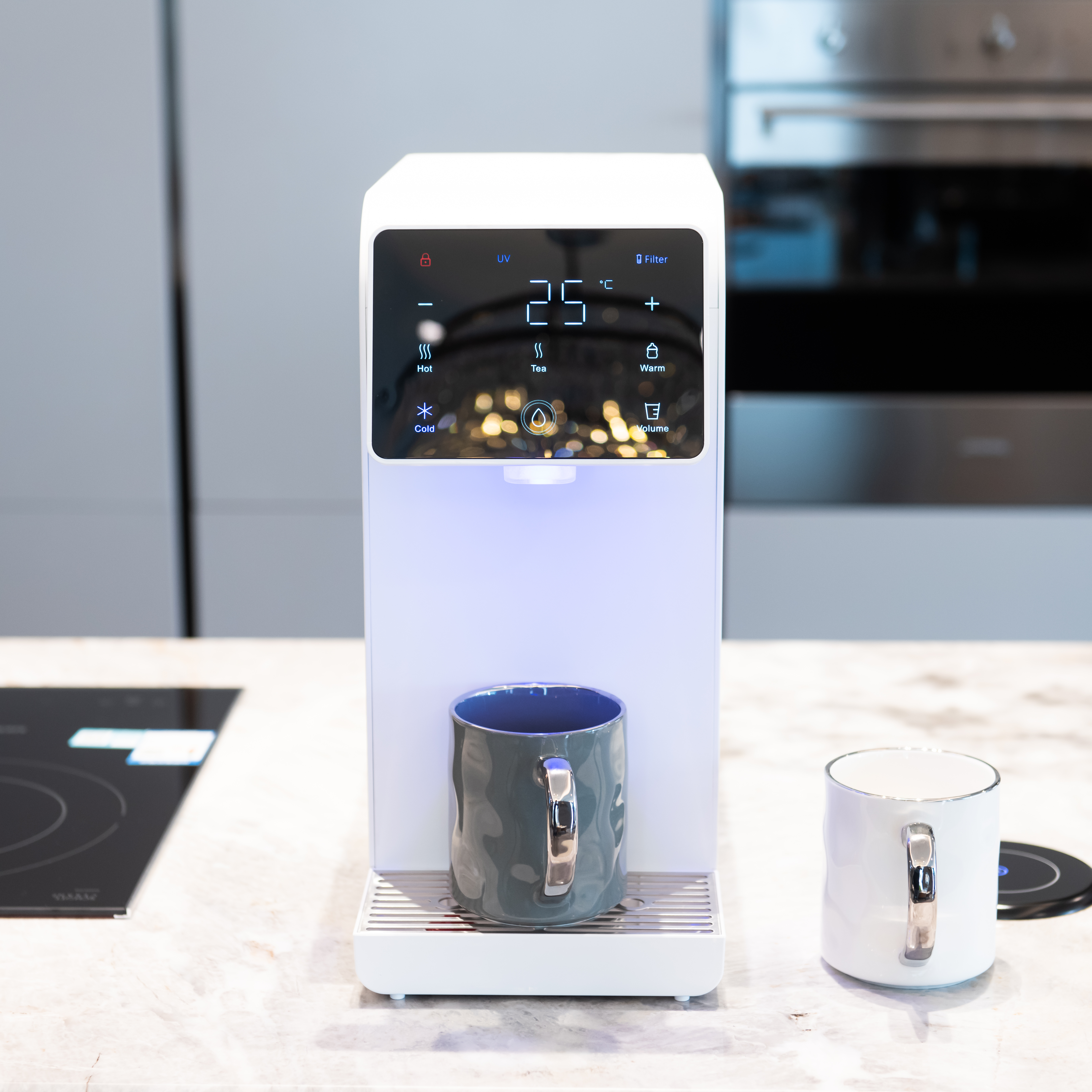
On a sweltering afternoon in the summer of 2022, I stood in my climate-controlled kitchen, watching my reverse osmosis system purify water to 99.9% purity. I felt deeply modern, almost smug. Then I remembered a story my grandmother told me: growing up in rural China, her family would fill clay pots with river water, drop in a handful of charcoal and crushed oyster shells, and let it settle overnight. By morning, it was drinkable.
It struck me then: we didn’t invent the desire for clean water. We’ve just industrialized it. For thousands of years, humans have been purifying water, using methods that were astonishingly sophisticated for their time. And in some ways, those ancient techniques still hold lessons for our hyper-technological age.
The First Water Filters: Charcoal and Sand
The oldest known water purification methods were simple, elegant, and surprisingly effective. They didn’t require electricity, didn’t generate waste, and used materials that were easily replenished.
Charcoal: The Original Carbon Filter
Charcoal, produced by burning wood in a low-oxygen environment, has been used to purify water for at least 4,000 years. Ancient Indians and Egyptians noticed that storing water in charred wooden vessels kept it fresher longer.
They didn’t understand the science, but they observed the effect. Today we know that activated carbon adsorbs contaminants through a process called physical adsorption, where molecules stick to the vast, porous surface area of the carbon. A single gram of modern activated carbon has a surface area of over 3,000 square meters. Ancient charcoal, while less refined, worked on the same principle.
What they didn’t know: They didn’t know about bacteria, viruses, or dissolved chemicals. They just knew that water stored with charcoal tasted better and didn’t spoil as quickly. They were removing odors and improving taste, just like our carbon filters do today.
Sand and Gravel: The Original Sediment Filter
Egyptian reliefs from 1500 BCE show water being filtered through sand and gravel. The Romans built elaborate settling basins, using sand and gravel layers to remove debris before water entered their aqueducts. In India, the Sushruta Samhita, a medical text from the 6th century BCE, described boiling water and filtering it through sand and charcoal.
What they didn’t know: Sand filtration works by physical entrapment and biological action. The biofilm that forms on sand grains actually digests some organic contaminants. It’s still used in municipal water treatment today.
The Boiling Revolution
Boiling water has been practiced for at least 5,000 years, but the ancient world didn’t understand microbiology. They boiled water to make it “lighter” or to remove “bad humors,” not to kill pathogens.
It wasn’t until 1854 that a British physician named John Snow identified contaminated water as the source of a cholera outbreak in London. His discovery was a watershed moment in public health. Boiling suddenly had a clear, scientific purpose: kill bacteria.
But boiling has limitations. It removes nothing: no minerals, no heavy metals, no chemical contaminants. It’s a one-trick pony. Our ancestors were protected from pathogens, but they were still drinking water that could be filled with arsenic, lead, or agricultural runoff. They just didn’t know it.
The Alchemists and the Philosophers’ Stone
Between the fall of Rome and the Renaissance, European alchemists experimented with water purification as part of their quest for the “philosopher’s stone” and the “elixir of life.” They distilled water, condensed steam, and created devices remarkably similar to modern distillation apparatus.
Distillation: Heating water to steam and condensing it back into liquid removes nearly everything—minerals, chemicals, bacteria. The ancient Greeks knew of distillation, but it was the Arab alchemists who refined it. In the 8th century, Jabir ibn Hayyan described distillation techniques for perfumes and medicines, noting that distilled water was especially pure.
But distillation was slow, energy-intensive, and impractical for households. It remained a laboratory curiosity for centuries.
The Great Discovery: Microscopic Life
The 17th century brought the microscope, and with it, a profound revelation. Antonie van Leeuwenhoek, a Dutch scientist, looked at rainwater through his homemade lenses and saw a teeming world of tiny creatures. He didn’t know they were bacteria, but he knew they were alive.
This discovery shifted the conversation: water wasn’t just a substance; it was a habitat. The idea that drinking water could be a vector of disease was still controversial—the germ theory of disease wasn’t widely accepted until the late 19th century—but the suspicion was planted.
The Modern Age: Filtration Becomes Industrial
The 19th century was the age of industrial water treatment. London built massive sand filters. Paris added coagulation (chemicals to clump particles). The world’s first municipal water chlorination plant began operating in 1908 in the United States.
The accidental discovery: Chlorination was almost accidental. It was known that chlorine killed bacteria, but no one had attempted it at scale. In 1908, a New Jersey water company, desperate to control a typhoid outbreak, began adding bleach to the water. It worked. By 1920, chlorination was widespread, and waterborne diseases plummeted.
But chlorination came with a cost. The same chemical that killed bacteria also created disinfection byproducts (DBPs), including trihalomethanes (THMs), which are suspected carcinogens. Today, municipal water treatment balances the need for disinfection against the risk of DBPs. It’s a constant tradeoff.
The Paradox of Progress
Here’s what I find remarkable: our ancestors’ methods, despite their simplicity, addressed many of the same problems we face today.
| Ancient Method | Problem Addressed | Modern Equivalent |
|---|---|---|
| Charcoal filtration | Taste and odor | Activated carbon filter |
| Sand/gravel filtration | Sediment, debris | Sediment pre-filter |
| Boiling | Bacteria, viruses | Boiling, UV sterilization |
| Distillation | Pure water | Reverse osmosis |
| Natural settling | Turbidity | Gravity sedimentation |
We haven’t fundamentally changed the solution set. We’ve just made the tools more efficient, more convenient, and more automated.
What Ancient Methods Got Right (That We Sometimes Forget)
1. The wisdom of observation: Ancient societies didn’t have scientific instruments, but they paid close attention to outcomes. “Water that tastes good doesn’t make us sick” was their quality control method. We sometimes lose this wisdom. We trust our TDS meter completely, even when our senses are telling us something is off.
2. Simplicity and repairability: Clay pots could be replaced. Charcoal could be gathered. Sand could be rinsed. Ancient water purification systems were local, repairable, and didn’t require proprietary parts. We’ve traded repairability for convenience and ended up with systems that are discarded when a $10 part fails.
3. Zero waste: The byproducts of ancient purification were settled sediment (which could be used as fertilizer) and spent charcoal (which could be buried or composted). Modern RO systems generate wastewater and plastic filter cartridges that persist in landfills for centuries.
4. The value of patience: Ancient methods took time. Water settled overnight. Sand filtration was a slow process. Boiling required fuel. We’ve optimized for speed, sometimes at the expense of thoroughness.
What We’ve Learned (That They Couldn’t Know)
1. The invisible world: Bacteria, viruses, heavy metals, VOCs, PFAS, pharmaceuticals. These contaminants are invisible to the naked eye. Ancient water had them too, but the ancient world didn’t know. Our science gives us a more complete picture.
2. The chemistry of water: We understand pH, hardness, alkalinity, and the interactions between minerals and contaminants. We can target specific problems with specific technologies.
3. The scale of contamination: Industrial pollution, agricultural runoff, and microplastics didn’t exist in ancient times. Our water is contaminated in ways no one could have imagined 200 years ago. We need the advanced tools we’ve developed.
4. The importance of testing: Ancient methods were guesswork. We can test our water, know exactly what’s in it, and choose the right solution.
The Synthesis: Honoring the Old, Embracing the New
I don’t propose abandoning your RO system for a clay pot. Modern water purification saves lives. But I do think we can learn something from ancient wisdom.
Pay attention to your senses. If the water tastes bad, it’s trying to tell you something. Don’t dismiss it.
Simplify when possible. If your local water is safe and just needs taste improvement, a simple carbon filter is enough. You don’t need a fourteen-stage system.
Think about lifespan and repairability. Choose systems with standard, replaceable parts. Avoid proprietary cartridges that lock you into a single manufacturer.
Reduce waste. Recycle your filters if possible. Compost your spent carbon. Every small action reduces the burden on landfills.
Be patient. Filtration takes time. Don’t push your system beyond its capacity.
The Morning Ritual
Every morning now, I pour a glass of water from my RO system. It’s a small ritual: clear glass, cool water, a moment of gratitude. I think about the journey that water has taken—through ancient aquifers, through municipal treatment plants, through my own system. I think about the millions of people, across thousands of years, who have sought the same thing: water that is safe to drink.
The technology has changed. The desire hasn’t.
My grandmother’s clay pot taught me something my RO system never could: clean water is a human right, a human need, and a human achievement. We’ve been working at it for millennia. And we’re still working.
Post time: Jun-17-2026