

When we bought our dream home on five acres of wooded land, the realtor beamed as she pointed to the well house. “Unlimited water, no monthly bills, pure and natural!” she chirped. I nodded along, imagining crisp, clean water straight from the earth, filtered by nature itself.
Six months later, I was elbow-deep in that well house, covered in iron sludge, cursing everything I thought I knew about water.
If you’re on well water, the advice you’ve been reading about standard water purifiers is not just unhelpful—it’s potentially dangerous. Here’s what I learned the hard way about the completely different world of well water treatment.
The Wake-Up Call: When “Clean” Water Isn’t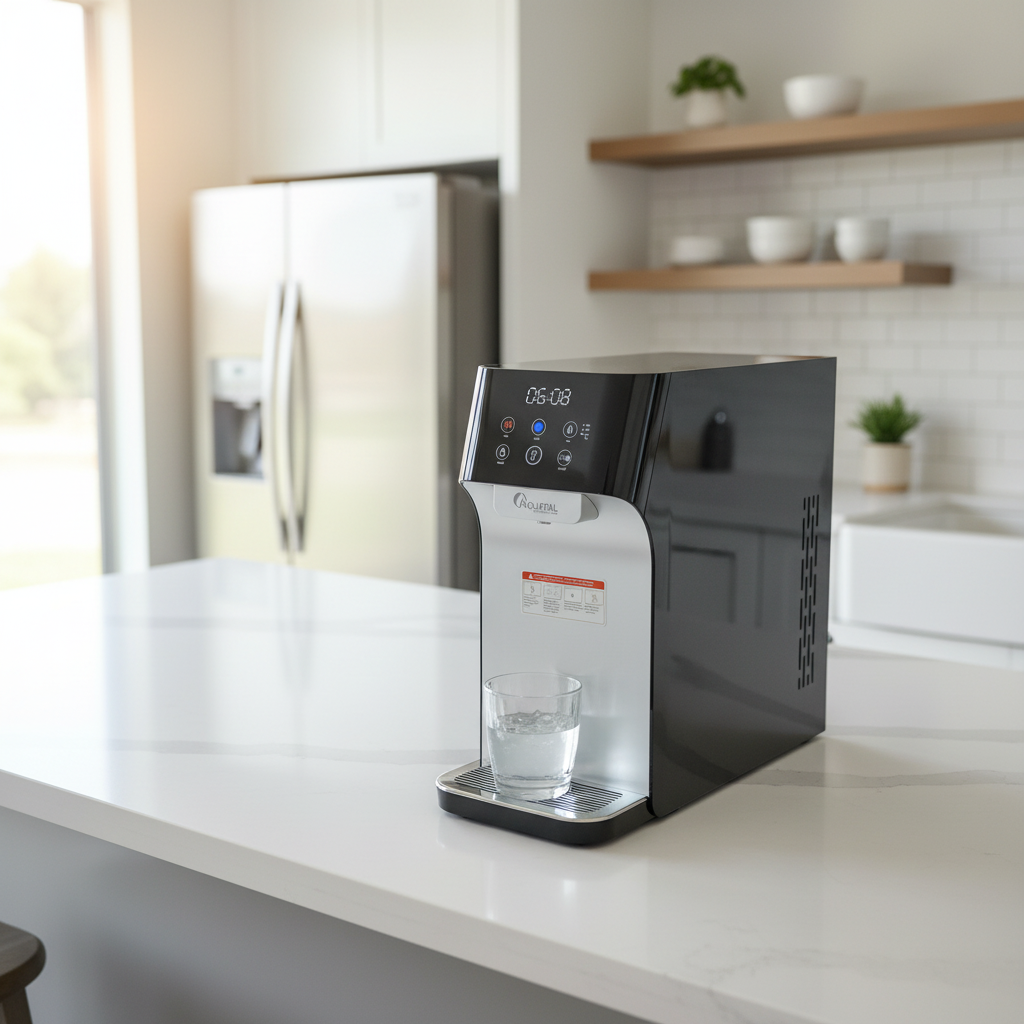
The first sign was subtle. The white porcelain sink in our guest bathroom began developing faint orange streaks around the drain. Within weeks, they deepened to a rust-brown that no amount of scrubbing could fully erase.
Then came the smell. Not the swimming-pool chlorine of city water, but something earthier—a faint, sulfurous whiff when we ran the hot water. My wife described it as “wet dog.” She wasn’t wrong.
The final straw was the laundry. Our white socks emerged from the wash with a grayish-yellow tinge that seemed to set in permanently.
I did what any modern homeowner would do: I bought a high-end countertop reverse osmosis system, the kind with glowing reviews from city dwellers raving about improved coffee taste. I installed it proudly, expecting salvation.
The water from that RO system tasted fine. But the orange stains continued. The smell persisted. The socks stayed gray.
The problem wasn’t my drinking water. The problem was my entire water supply. I was treating a symptom while the disease raged through every pipe in my house.
Well Water 101: It’s Not Dirty, It’s Different
City water is treated, disinfected, and pressurized through a municipal system. Its contaminants are relatively predictable: chlorine, chloramines, maybe some lead from old pipes, trace pharmaceuticals. A standard carbon filter or RO system is designed for this predictable chemical cocktail.
Well water is raw. It’s groundwater that has been traveling through geological formations, dissolving minerals and picking up whatever it encounters along the way. Your well is unique—a fingerprint of your specific property’s geology.
Common well water villains include:
| Contaminant | What It Does | What It Looks/Smells Like |
|---|---|---|
| Iron & Manganese | Stains fixtures and laundry; metallic taste | Orange/brown/black stains; rusty color |
| Hydrogen Sulfide | Corrosive, foul-smelling gas | “Rotten egg” smell, especially in hot water |
| Hardness (Calcium/Magnesium) | Scale buildup, reduced soap efficiency | White crust on faucets; spots on glassware |
| Sediment | Sand, silt, clay particles | Cloudy water; clogged faucet aerators |
| Bacteria (Coliform/E. coli) | Health risk from surface water intrusion | Often invisible; requires testing to detect |
| Acidity (Low pH) | Corrosive, leaches metals from plumbing | Blue-green stains (copper); metallic taste |
| Nitrates | Agricultural runoff; health risk | Invisible; requires testing |
My “city water” RO system addressed exactly none of the problems destroying my fixtures, smelling up my showers, and ruining my laundry.
The Well Water Treatment Hierarchy: Start at the Source
A well water professional (yes, that’s a real specialty) explained it to me with a simple analogy: “You don’t put a polishing filter on a mud puddle. You deal with the mud first.”
Level 1: The Pre-Treatment Zone (Protect Everything)
Before water reaches your house, it needs basic defense:
- Sediment Filtration: A simple spin-down filter or cartridge filter catches sand and grit that would destroy everything downstream.
- Chemical Injection: For severe issues, systems inject chlorine, hydrogen peroxide, or air to oxidize iron, sulfur, and bacteria, making them filterable.
- Retention Tank: Gives injected chemicals time to work before water moves forward.
Level 2: The Core Treatment (Fix the Big Problems)
This is where the real work happens:
- Water Softener: If you have hard water (calcium/magnesium), this is non-negotiable. It protects your water heater, pipes, and appliances from scale.
- Iron Filter: Specialized media (like Birm, Greensand, or Air Injection Oxidizing filters) chemically or physically removes dissolved iron and manganese.
- Acid Neutralizer: A tank of calcite or magnesium oxide gradually raises low pH, stopping corrosion.
- Carbon Filter: Removes chlorine (if you’re injecting it), improves taste, and polishes the water.
Level 3: The Polish (For Drinking Only)
Only after Levels 1 and 2 should you consider:
- Under-Sink RO System: Now that the water is already conditioned, a simple RO system will last longer and perform better, providing pristine drinking water.
- UV Sterilization: If bacteria is a concern, a UV light at the point of entry (or at the kitchen tap) provides final biological protection.
My house had been running raw well water through expensive appliances, slowly destroying them. My water heater had six years of scale buildup. My dishwasher was fighting a losing battle against iron. My RO system’s membrane was fouled within months by sediment I never filtered.
The Testing Revelation: What I Didn’t Know I Didn’t Know
The turning point was a comprehensive well water test, not the $20 home kit from the hardware store, but a full laboratory analysis that cost about $200. The results were a roadmap to solving my problems:
- Iron: 3.2 ppm (moderate, explains the stains)
- pH: 6.2 (acidic, explains the blue-green copper stains)
- Hardness: 15 grains per gallon (very hard, explains the scale)
- Hydrogen Sulfide: Present at low levels (explains the occasional smell)
- Bacteria: None detected (one piece of good news)
Armed with this data, I could finally design a system, not just buy another appliance.
The Transformation: What Proper Treatment Looks Like
My final system, installed by a professional who actually understood well water, includes:
- Big Blue Sediment Filter: A 20-inch housing with 5-micron pleated filters, catching sand and grit before anything else.
- Air Injection Oxidizing Filter: A single tank that uses compressed air to oxidize and filter out iron and hydrogen sulfide. The smell vanished immediately.
- Acid Neutralizer: A tank of calcite media slowly dissolving into the water, raising pH from 6.2 to 7.2. The blue stains stopped within weeks.
- Water Softener: A standard ion-exchange softener tackling the 15-grain hardness. Our glassware finally sparkles.
- Under-Sink RO System: A simple, affordable RO unit at the kitchen sink for drinking water. Its filters now last 12-18 months instead of 3.
The total cost? About $4,500 installed, including all equipment. My $1,200 “city water” RO system had been treating symptoms while my pipes suffered. This system treats the disease.
Lessons for the Well Water Warrior
If you’re on well water, or considering buying a home with a well, here’s my hard-won advice:
1. Test Before You Treat
Don’t guess. Don’t assume. A comprehensive lab test is the cheapest investment you’ll make. It tells you exactly what battle you’re fighting.
2. Find a Well Specialist
Your local plumber may be excellent at fixing leaks but clueless about water chemistry. Seek out companies that specialize in well water treatment. They understand the nuance of iron vs. manganese, the interaction between pH and hardness, and the proper sizing of equipment.
3. Think Systemically
You don’t need one magic filter. You need a sequence of treatments, each preparing the water for the next stage. Skipping steps guarantees failure.
4. Protect Your Investment
A well water treatment system requires maintenance—refilling softener salt, backwashing filters, changing sediment cartridges. Set calendar reminders and stick to them.
5. Budget for the Long Term
Quality well water equipment costs more upfront but saves enormously in appliance replacement, plumbing repairs, and frustration over the long haul.
The Morning I Realized It Worked
Six months after installation, I walked into the bathroom and stopped short. The porcelain sink was spotless. No orange streaks. No blue-green stains. Just white, clean ceramic.
I turned on the shower and inhaled deeply. Nothing. No sulfur, no chlorine, no smell at all.
I filled a glass from the kitchen tap and held it to the light. Crystal clear.
For the first time since moving in, I wasn’t thinking about my water. I was just living in my home. And that, I’ve learned, is the true measure of success.
Post time: Mar-16-2026