

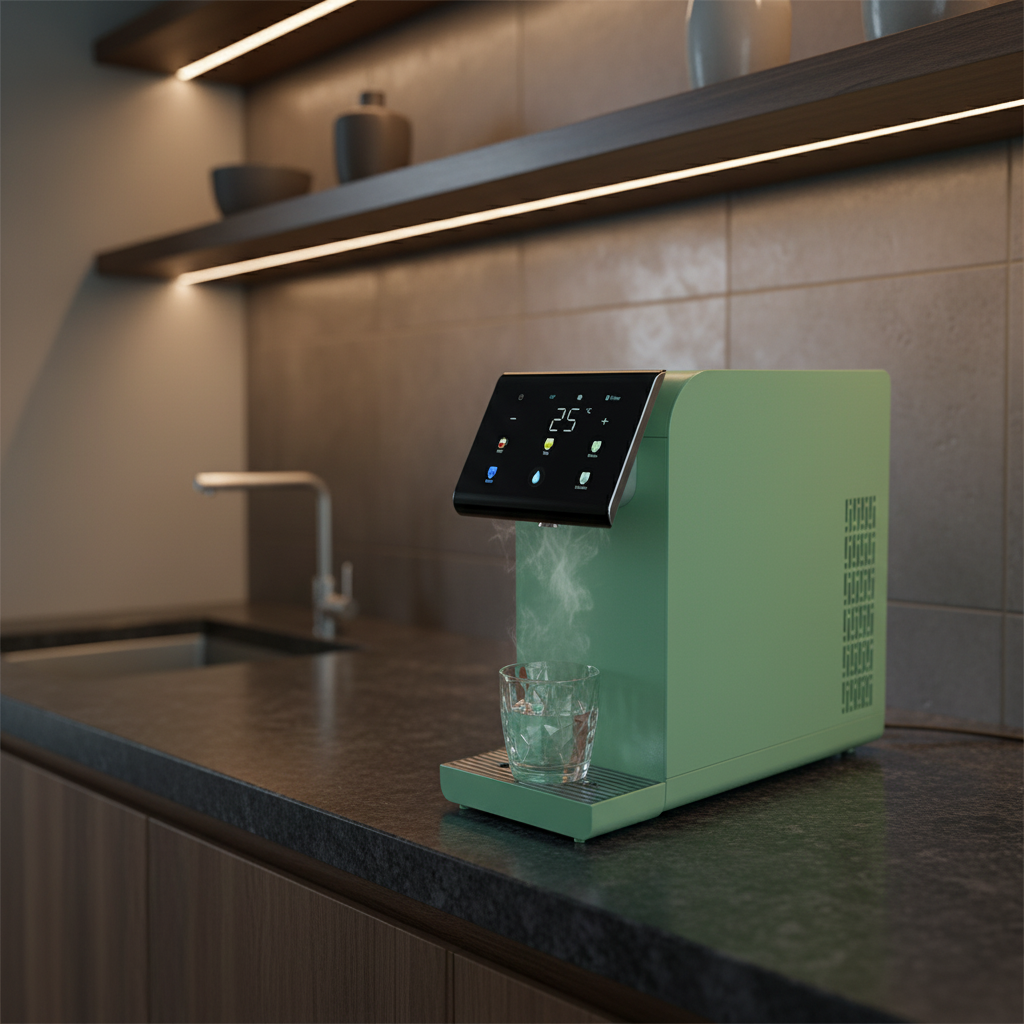
 You did everything right. You researched the brands, compared the specs, and finally installed that sleek water purifier under your sink. The indicator light glows a reassuring blue, and you’ve stopped buying plastic bottles. Life is good.
But here’s an uncomfortable question: How do you really know it’s working?
We tend to trust technology implicitly. The blinking light says “pure,” so we believe it. Yet, between that light and your glass of water lies a complex system of filters, membranes, and tanks—all subject to wear, tear, and the quiet creep of inefficiency. Your sense of security might be just that: a sense, not a guarantee.
Today, we’re moving past the brochure promises. Let’s talk about the tangible, everyday signs that tell the true story of your purifier’s health. This is a guide to becoming your own water quality expert, using nothing more than your senses and a few minutes of observation.
Your Senses Are Your Best Sensors (And They’re Already Installed)
Your body is equipped with sophisticated detection tools. Before you check an app, check in with yourself.
- The Eye Test: Clarity Isn’t Just Cosmetic
Fill a clear glass from your purifier and hold it against a white background in good light. Now, do the same with a glass of water from a newly opened, reputable bottle of spring water. Your purified water should match that brilliant, unclouded clarity. Any persistent haze, yellowish tint, or floating particles after the system has been running isn’t normal. It’s a visual SOS from your filters. - The Sniff Test: The Nose Knows
Smell is your earliest warning system. Pour a fresh glass of filtered water, cover the top, give it a vigorous shake for 10 seconds, and then immediately take a big sniff. What you’re smelling are volatile compounds.- A chlorine or chemical smell means your carbon filters are exhausted and can no longer adsorb these contaminants.
- A musty, earthy, or “dank” odor often points to bacterial growth in a stagnant storage tank or a biofilm building up in old filter media.
- Metallic scents can suggest corroding internal components.
Pure water should smell like absolutely nothing. Any distinct aroma is a direct message from your system.
- The Taste Test: Recalibrating Your Baseline
The gold standard for purified water is that it should have no flavor. It shouldn’t taste sweet, flat, metallic, or of plastic. Its purpose is to be a neutral hydrating agent. If your coffee or tea suddenly tastes “off,” or if you can detect a distinct flavor in the water itself, your final-stage polishing filter has likely lost its efficacy. Your taste buds are the final, and most important, quality control checkpoint.
Beyond Sensation: The Performance Red Flags
Sometimes, the system tells its story not through the water, but through its own behavior.
- The Slowdown: Time how long it takes to fill a standard one-liter bottle. Note this “baseline” when filters are new. A gradual but significant increase in fill time is one of the clearest mechanical signs of a clogged pre-filter or sediment block. The system is struggling.
- The Unusual Orchestra: Pay attention to new sounds. A pump that groans or cycles more frequently, or unusual gurgling in the drain line, can indicate pressure changes or flow issues caused by failing components.
- The Reset Button Tango: If you find yourself pressing the “reset filter” indicator button more out of habit than because you actually changed the filter, you’ve entered the danger zone of self-deception. That light is a timer, not a diagnostician.
From Observation to Action: Your Simple Audit Plan
Knowledge is useless without action. Turn these observations into a simple 15-minute monthly ritual:
- Week 1: The Sensory Check. Perform the Eye, Sniff, and Taste tests. Write down one word for each: “Clear/Cloudy,” “Odorless/Musty,” “Neutral/Metallic.”
- Week 2: The Performance Log. Time your one-liter fill. Note it down. Is it within 10-15 seconds of last month’s time?
- Keep Your Receipts (for Filters): The moment you install a new set of filters, order the next set immediately and write the install date on them. This ends the “maybe it can last one more month” negotiation.
- When in Doubt, Test it Out: For ultimate peace of mind, use an at-home TDS (Total Dissolved Solids) meter on your purified water. While not a complete safety test, a sudden spike in the TDS number from your established baseline is a definitive, numerical red flag that your RO membrane is failing.
Post time: Dec-22-2025