

Think about the most critical safety devices in your home. The smoke alarm with its piercing beep. The carbon monoxide detector with its ominous flash. They demand attention. They fail loudly.
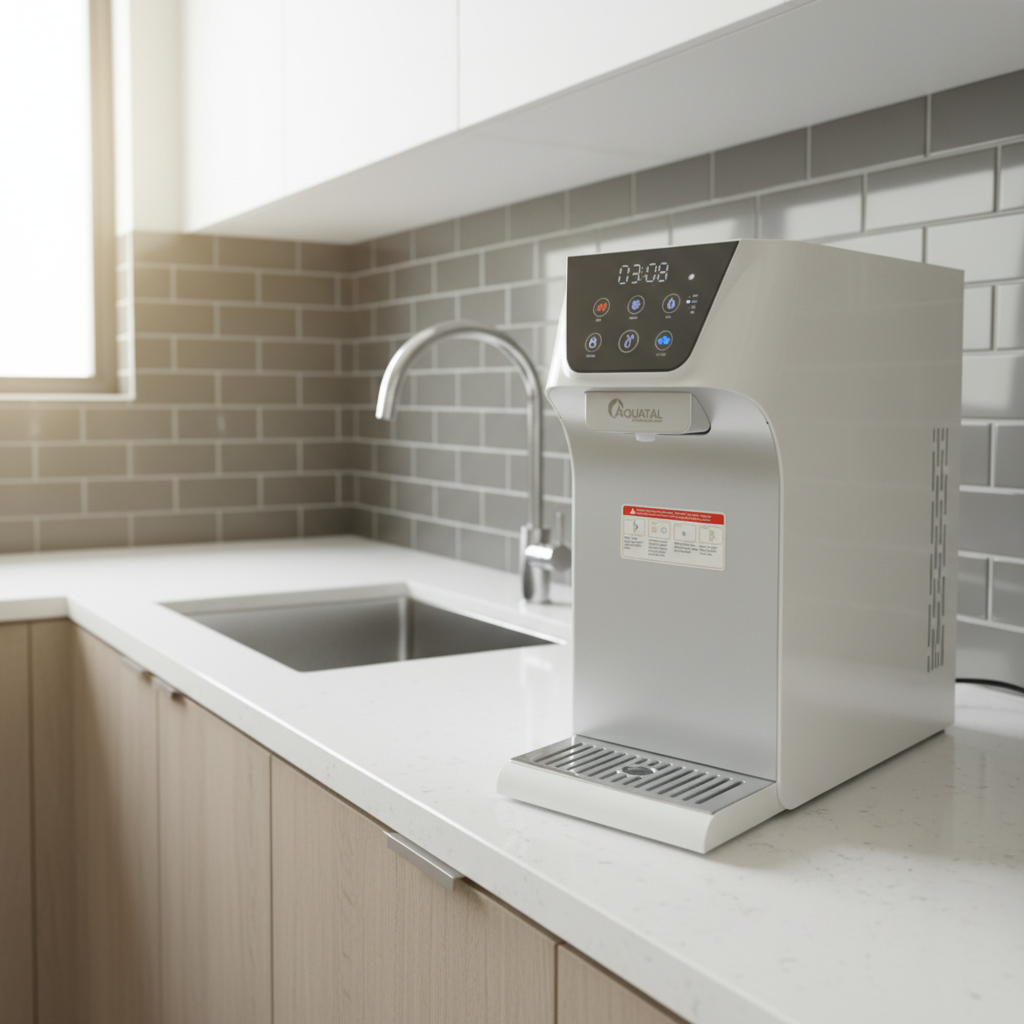
Now, think about your water purifier. It sits under your sink, humming quietly. Its only sign of distress is a tiny, ignorable LED that changes from green to yellow to red. If its filters expire, if its membrane fails, if bacteria colonizes its tank… it fails silently. Contaminated water flows just as easily as clean water, and you’d never know by looking at it.
This is the unique danger of water purification technology: its most common mode of failure is invisible, tasteless, and often odorless until it’s severe.
We are diligent about checking expiration dates on milk and medication, yet we allow the very filters responsible for the safety of every glass of water we drink to operate months or even years past their effective lifespan. We’ve been trained to react to alarms, not to the quiet absence of them.
The Three Filters of Complacency
Why do we let this happen? Three mental models are to blame:
- The “Clear Water” Fallacy: If water looks clear and has no obvious smell, we assume it’s safe. But the most dangerous contaminants in modern water supplies—lead, PFAS “forever chemicals,” nitrates, pesticides—are invisible. A filter that has stopped removing lead doesn’t make the water cloudy; it just lets poison through.
- The “It’s Still Flowing” Fallacy: We equate function with efficacy. A clogged sediment filter will slow flow, but a spent carbon filter or a compromised RO membrane won’t. Water will gush out just as fast, creating the powerful, comforting illusion that all is well. The system isn’t broken; it’s just become a very expensive tap.
- The “I’ll Get to It” Fallacy: The filter change indicator turns yellow. We think, “I’ll order them this weekend.” The weekend becomes next month. The light turns red. We press the reset button, silencing the only voice the machine has. We’ve actively trained ourselves to ignore its one distress signal.
Your expired water filter isn’t like expired bread—obvious and avoidable. It’s like an expired smoke detector battery: everything seems fine until the moment of crisis, and by then, it’s too late.
How to Break the Cycle: From Reactive to Proactive
Stop treating filter changes as a reaction to a blinking light. Start treating them as a non-negotiable, scheduled health intervention for your home.
- Implement the “First Day” Rule: The day you install a new filter, immediately do two things: 1) Write the install date and the next due date on the filter with a permanent marker, and 2) Order the next set of replacements. The best time to buy filters is when you don’t need them yet.
- Schedule a Quarterly “Water Health” Check: Put it on your calendar. Every three months, take five minutes. Sniff the water. Check the flow rate. Look for any leaks. This habit builds a baseline awareness that a blinking light never can.
- Demand Transparency, Not Just a Light: When buying a new system, prioritize those with smart features that track actual usage or water quality, not just elapsed time. A system that alerts you because it detects a drop in purity is infinitely more valuable than one that just guesses based on a 6-month timer.
The security of filtered water isn’t a product you purchase once. It’s a subscription service you renew every 6 to 12 months. Your purifier isn’t an appliance; it’s a life-support system for your home’s most vital resource. It deserves more than your forgetfulness.
Post time: Jan-12-2026