

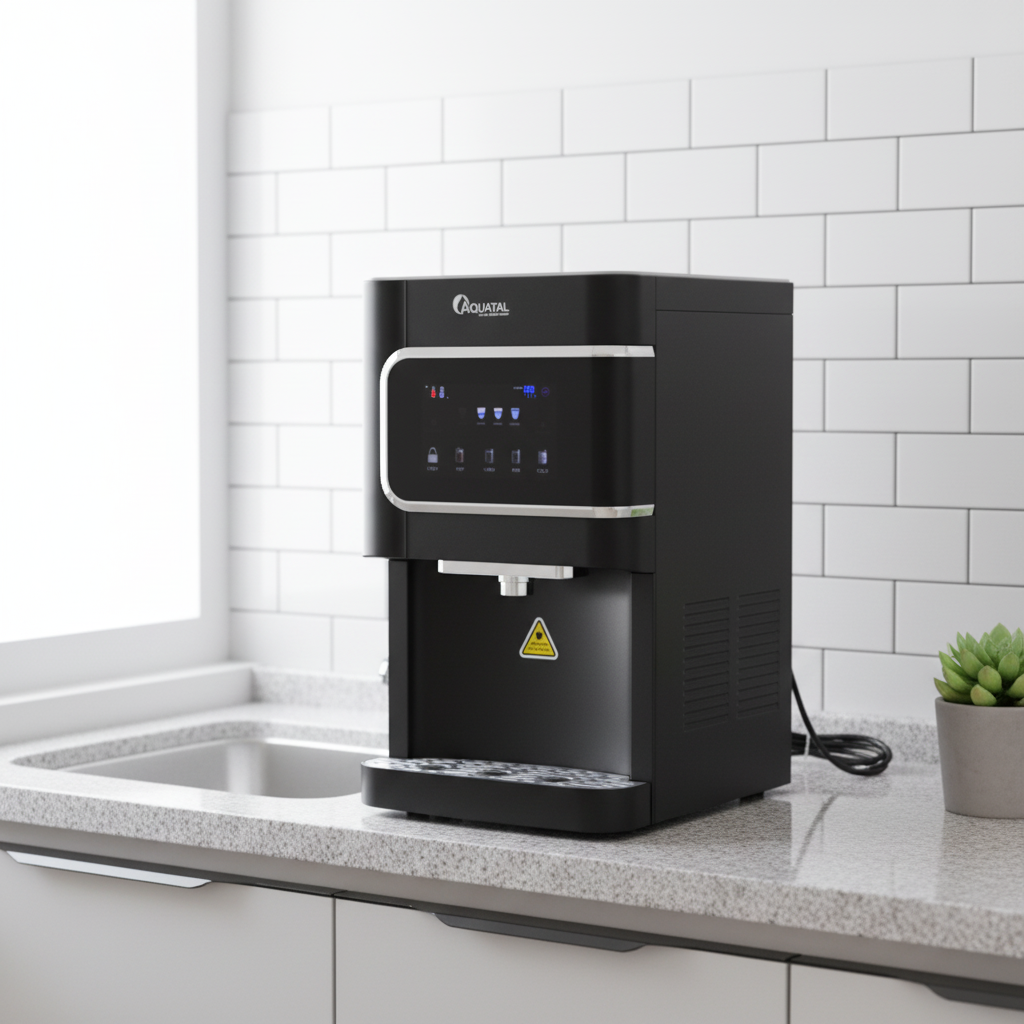
It’s a tempting pitch. “Pure, clean water for less!” The price tag is low, the marketing is slick, and the savings seem too good to pass up. You buy it, feeling like a savvy shopper who has outsmarted the system. You’ve gotten a water purifier for the price of a good dinner out.
What you’ve actually bought is a ticket to a much more expensive long-term experience. In the world of water purification, the first price you see is almost never the true price. The real cost is hidden in a series of quiet, recurring charges that turn a “budget” buy into a financial sinkhole.
This isn’t about snobbery towards inexpensive brands. It’s about understanding the fundamental business model of many low-entry-cost appliances: Razor & Blades 2.0. Sell the handle cheap, make a fortune on the proprietary blades for years.
Let’s follow the money trail of a bargain purifier and see where it really leads.
The Four Hidden Tolls of a “Cheap” System
1. The Filter Trap: Proprietary & Pricy
This is the biggest black hole. That $99 all-in-one unit comes with a small, oddly-shaped filter cartridge. When it’s time to replace it in 6 months, you discover:
- Only the original manufacturer makes it. No third-party, cheaper alternatives exist.
- It costs $49. You just paid half the original unit’s price for a single consumable.
- Do the math: Over 5 years, with 10 filter changes, you’ll spend $490 on filters alone, plus the initial $99, for a total of $589. For that price, you could have bought a reputable mid-tier system with standard-sized, widely available filters on day one.
2. The “Efficiency” Mirage: Water & Electricity
A cheap purifier is often an energy and water hog.
- Water Waste: An old-tech RO system might have a waste-water ratio of 1:4 (1 gallon pure, 4 gallons to drain). A modern, efficient system is 1:1 or 2:1. If your family uses 3 gallons of pure water a day, that old tech wastes 9 extra gallons daily, or 3,285 gallons a year. That’s not just an environmental cost; it’s a spike in your water bill.
- Energy Vampire: Cheap pumps and non-insulated tanks run longer and work harder, adding hidden cents to your electric bill every day.
3. The Short-Lived Savior: Planned Obsolescence
The build quality of internal parts is the first place costs are cut. Plastic housings are thinner and more prone to cracking. Connectors are flimsier. The system isn’t designed to be repaired; it’s designed to be replaced.
When a valve fails at the 13-month mark (just past the 1-year warranty), you’re faced with a repair bill that’s 70% of a new unit’s cost. You’re forced back to the beginning of the cycle.
4. The Performance Penalty: You Get What You (Don’t) Pay For
That low price often reflects a simplified filtration path. It might have a single, combined filter instead of dedicated stages. The result?
- Slower Flow Rate: A 50 GPD (gallons per day) system fills a glass painfully slowly compared to a standard 75-100 GPD system. Time has value.
- Incomplete Filtration: It may claim to be an “RO System” but have a low-rejection-rate membrane that lets more dissolved solids through, or lack a final polishing filter, leaving water with a slight taste.
The Smart Buyer’s TCO (Total Cost of Ownership) Checklist
Before you click “buy,” run through this quick analysis:
- Find the Filter Price: What is the cost of a full replacement filter set? (Not just one, all of them).
- Check the Filter Life: What is the manufacturer’s recommended change interval for your water conditions?
- Do the 5-Year Math: (Initial Price) + ( (Filter Cost / Filter Life in Years) x 5 )
- Example Cheap Unit: $99 + (($49 / 0.5 yrs) x 5) = $99 + ($98/yr x 5) = $589
- Example Quality Unit: $399 + (($89 / 1 yr) x 5) = $399 + $445 = $844
- Compare the Value: For that $255 difference over 5 years ($51/year), the quality unit offers better efficiency, faster flow, a longer warranty, standard parts, and likely better materials. Which provides more value?
- Check Certifications: Does the budget unit have independent NSF/ANSI certifications for the contaminants you care about, or just vague marketing claims?
Post time: Jan-20-2026