

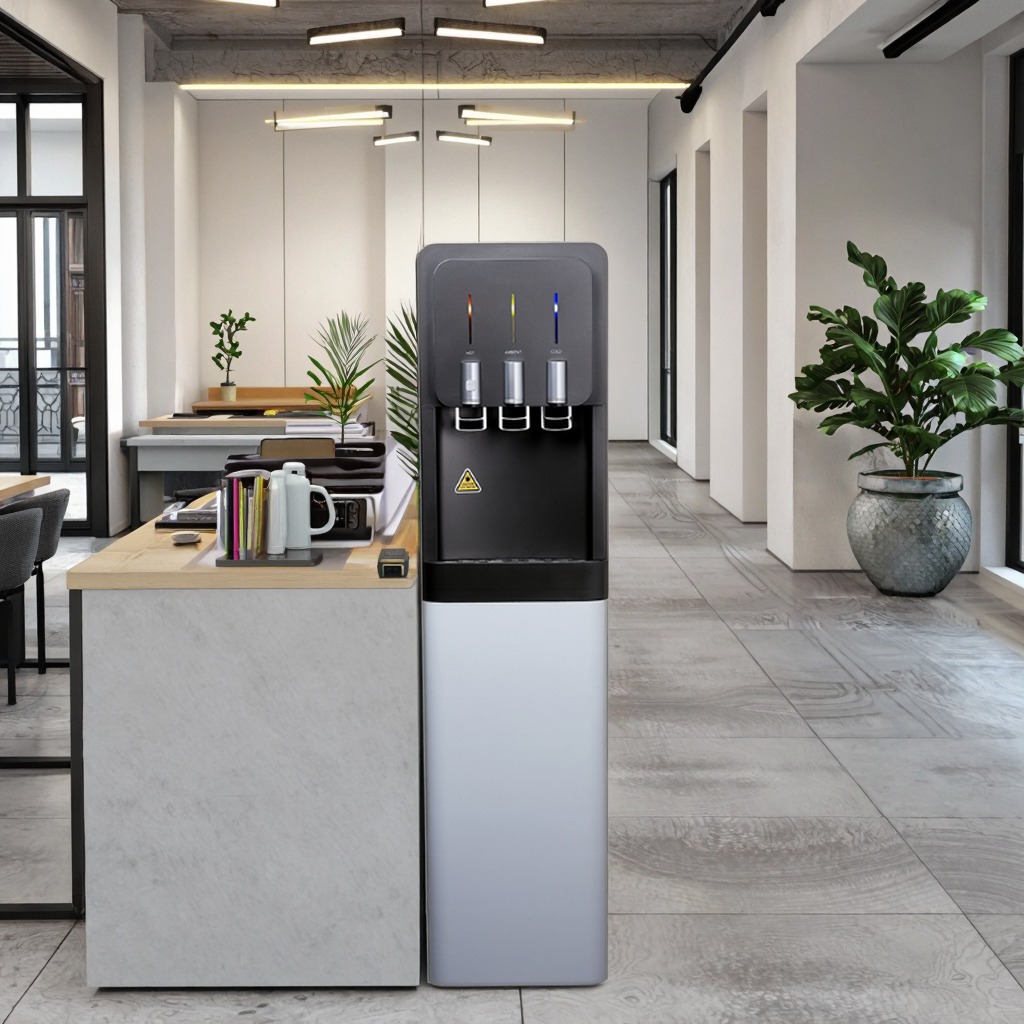
Last year, during my new home renovation, I ranked a water purifier as my number one “health investment.” I did my homework, consulted with three brands, and finally spent nearly $10,000 on a high-end reverse osmosis (RO) system touted as “seven-stage filtration, smart-connected, and baby-safe.” After installation, watching the real-time TDS display drop to single digits, I felt the money was well spent.
Six months later, problems began to surface like a slow leak. Here are the pitfalls I stepped into, so you can avoid them.
Lesson 1: The Membrane Brand Matters More Than the “800 GPD” Number
I was fixated on one spec: flow rate. The salesperson said, “Get the 800 GPD (gallons per day). High flow, fast filling, future-proof.” I believed it. Sure, it fills a glass quickly. But I never asked the crucial question: Who manufactures the RO membrane inside?
I later learned that there are only a handful of top-tier global RO membrane manufacturers, like Dow Filmtec, Hydranautics, and GE. When I opened my unit, the membrane housing was stamped with an unknown OEM brand name.
The Hard Truth: Flow rate (GPD) determines speed, but the membrane brand determines core purification efficacy and lifespan. An 800 GPD membrane from a third-tier manufacturer may have far lower salt rejection rates, stability, and fouling resistance than a 400 GPD membrane from a top brand. Always demand the specific brand and model number of the RO membrane in writing, and get confirmation that the same brand/spec will be available for future replacements.
Lesson 2: “Smart” Features Can Be a Stupid Trap
My machine connected to an app. For the first three months, it felt cool: I could see TDS, filter life percentage, and daily water usage. But that was it. This “intelligence” was merely one-way data broadcasting.
- Filter life was a simple countdown timer, not calculated based on actual water quality or usage volume. The timer ticked down whether we used water or not.
- It told me to replace the first-stage sediment filter, but when I opened the clear housing, the filter was still snow-white, nowhere near the needed brown change-color.
- Worst was the false alarm. The app once urgently alerted “WATER QUALITY ABNORMAL,” showing a TDS spike to 80. My family was on edge for hours. A customer service remote reset fixed it. The engineer later said it was likely a transient sensor glitch or data transmission error. One false alarm can shatter all trust.
The Hard Truth: Be wary of “smart for smart’s sake.” True intelligence means using multiple sensors (flow, pressure, differential TDS) to precisely calculate filter exhaustion and learn your household’s usage patterns. A simple manual timer reset is more reliable than a misleading digital one.
Lesson 3: “Zero Stagnant Water” Tech: Marketing Hype or Real Deal?
My unit advertised “Zero Stagnant Water” or “First Glass Drinkable” technology. The principle: after idle periods, the system flushes the RO membrane with pure water to reduce concentrated contaminants, so the first morning glass isn’t as high in TDS. Sounds great.
Reality: My first morning glass measured around 30 TDS (much better than the 100+ without the feature), but it was still noticeably higher than the steady-state 5 TDS. Furthermore, to achieve this, the machine auto-cycled several times a day and night. I could hear the faint “gurgle” of flushing and pump hum at midnight.
The Hard Truth: ”Zero Stagnant Water” is an improvement, not a miracle. Don’t expect overnight water to be identical to fresh. Ask the salesperson for two concrete specs: 1) What is the TDS of the first glass after a 4-hour shutdown? 2) How many auto-flush cycles per day does this require, and how much water is wasted? Hesitation is a red flag.
Lesson 4: Filter Costs Are a Silent, Slow Burn
The salesperson promised: “Filters are cheap, averaging just over a dollar a day!” He wasn’t lying—he was quoting the average cost of the cheapest first-stage sediment filter ($99 / 6 months).
When the time came for a full filter change, the real bill hit:
- Stage 1 Sediment Filter: $99
- Stage 2 Carbon Filter: $199
- Stage 3 RO Membrane (no-name brand): $899
- Stage 4 Post-Carbon Filter: $159
Total for one set: $1,356. And the replacement schedule? The RO membrane every 2-3 years, others every 6-12 months. This is a significant, recurring cost. Worse, these were proprietary cartridges, locking me into the brand with no third-party alternatives.
The Hard Truth: Before buying, you MUST research the model numbers and retail prices of ALL replacement filters on the brand’s official site. Calculate the 3-year total cost of ownership. This “lifetime cost” is more critical than the sticker price of the machine.
Lesson 5: Service Is Invisible Until You’re Parched
Installation was smooth. The crisis hit on a Saturday night. The machine stopped dispensing water with no error code. The 400-service number led to an AI voicemail. A local technician didn’t call until Sunday noon, saying he could only come Monday. We spent a weekend without clean water.
The technician came Monday, fiddled for 30 minutes, and said the “inlet solenoid valve was sticking.” He tapped it, and it worked. I asked how long until it failed again. He smiled, “Hard to say. But we don’t stock many parts for this model locally. Replacement would take 3-4 days from headquarters.”
A chill went down my spine. Are local spare parts—for the “heart” (pump/membrane) and “joints” (valves)—actually in stock? The salesperson never mentioned this.
The Hard Truth: Before signing, investigate local service strength. Ask for the local service center’s direct contact. Call them with a hypothetical repair question to gauge their response time and knowledge. A premium purifier without prompt, competent service is just a heavy, leaking box when it breaks.
My $10,000 lesson wasn’t just about water. It was about looking beyond flashy specs and asking the boring, practical questions about core components, true intelligence, real-world performance, long-term costs, and service lifelines. Your purifier is a long-term partner for your health. Choose one built on transparency, not just marketing.
Post time: Feb-11-2026